
“SDS can help put people in the driving seat of their own lives”

Linda Tuthill, Chief Executive of the Action Group and contributor to our Insights Podcasts series, on the blocks that must be removed to ensure Self-Directed Support can be truly empowering
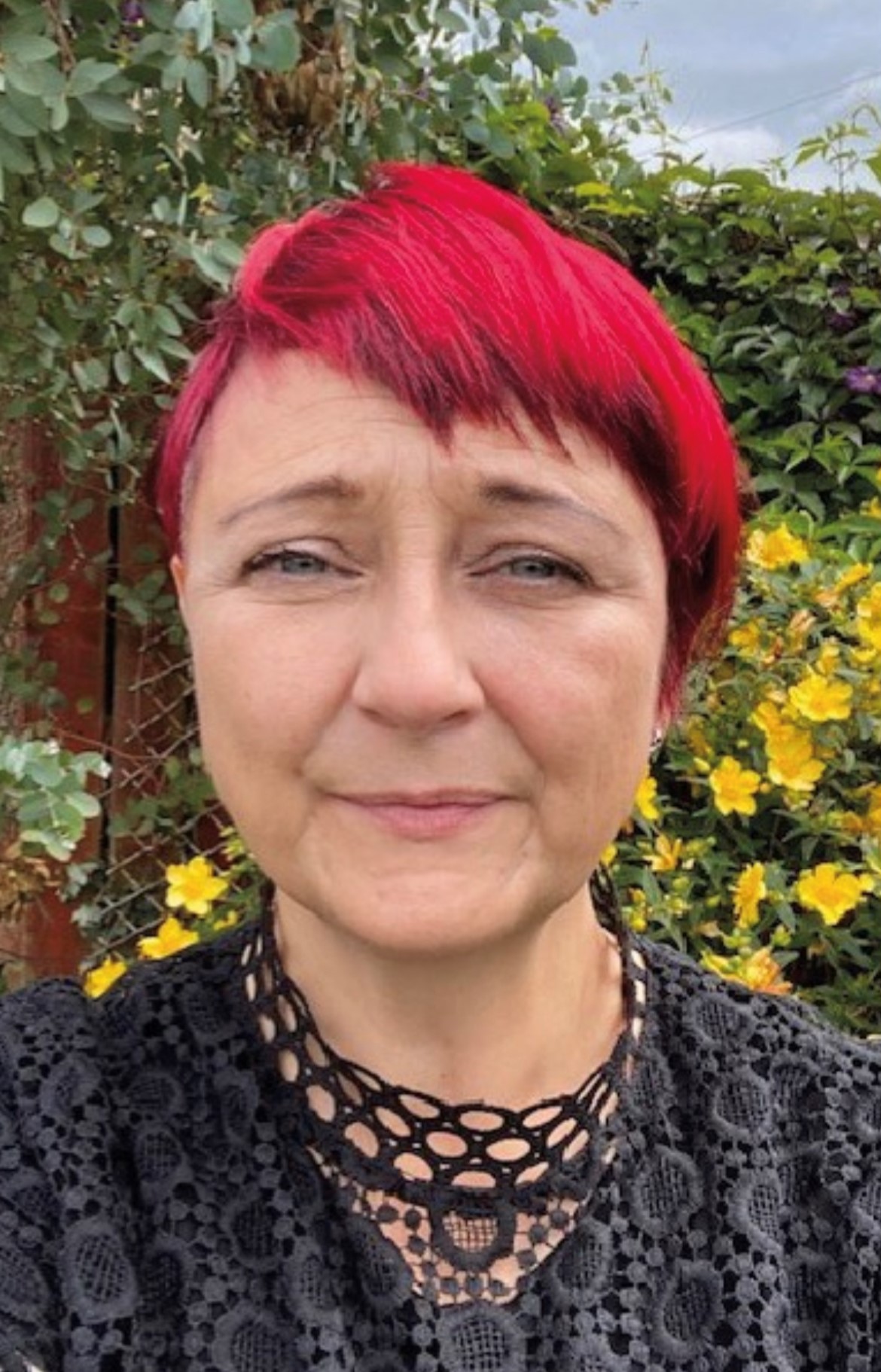
I am passionate about people who use any services having the power and control in their own hands. There are many ways this can happen, through person-centred support services, involvement, and self-advocacy support.

A main way is for the person to have the money in their own hands or in their own name, managed in a way that gives them as much control and flexibility as possible. It also means giving people the choice to not have this if that is not where they are at in their life. It should never be forced on anyone. But instead, if the right support is in place, it is hoped that more and more supported people and carers will opt for Self-Directed Support (SDS).

When done right, SDS is empowering and helps really put the person in the driving seat of their own lives and support. When done badly (i.e. the person isn’t given the support to know what they can buy with their money or there are not the options to buy etc) then nothing really changes.

Sadly, there are also a lot of blocks in the system preventing full implementation of SDS in Scotland, in the spirit of the Social Care (Self-directed Support) (Scotland) Act 2013. These include:

• Social workers not knowing about SDS

• SDS not being offered at assessment stage

• Bureaucracy being put in place with complicated systems to access SDS, putting off those who want support and organisations who feel unable to engage fully with SDS due to this complexity.

There are also simply the time and capacity barriers that people desperate for support face, that carers face and that staff in Councils and social care organisations face. This has potentially never been more of an issue as it is now due to post-pandemic pressures.

To really get SDS pushed forward we need investment in all parts of the system, including social care organisations that are often best placed to “sell” SDS and to provide innovative solutions to those who then have their own budgets. Without proper investment I am not optimistic that the postcode lottery of SDS take-up will improve beyond what Audit Scotland concluded in 2017.

However, as an optimist I hold on to the hope that the implementation gap will close further through the efforts of the many self-advocates and SDS organisations that exist to promote this important right for everyone who accesses social care now and in the future. My organisation will continue to play its part by continuing to work together with our many SDS funders, with options 1 and 2, and to empower others to move to SDS if this is what they want and help them to work with social work for this to happen.

CCPS’s ethical commissioning workstream, of which its Insights Podcasts series on SDS are a part, helps focus debate and energy around SDS. We need that energy so it doesn’t end up being just great legislation with continued poor or patchy implementation, but instead great legislation with great impact in the lives of everyone in Scotland – given that most of us need support at some point in our lives.

SDS matters to us all!

Listen to our Insights Podcast series. Linda appears on episode 2, which focuses on person-centred care and SDS.

Find out more about the Action Group. 

“Some days, it feels like we literally hold people’s lives in our hands”

As part of our Rethink To 13 series, a support practitioner in Sense Scotland’s short breaks service tells us about the impact a pay increase to £13 would have on her, the workforce – and the people they support

“As a support practitioner in a respite unit for young people and adults with complex needs, I wear many hats, and perform so many roles in a day. I am carer, friend, cook, nurse, driver, emotional/physical outlet, entertainer, advocate, teacher, family, to name a few.

Some days, it feels like we literally hold people’s lives in our hands. I am paid the Living Wage for only one of these roles. Raising the wage to at least £13 an hour would not only allow us to feel more appreciated and valued within these roles, it would encourage experienced staff to stay within the care sector.

We do this job to the best of our ability and because we care. But in turn, we also need to feel that we are cared for. My role requires me to be registered with the SSSC, a professional body. However, we still are classed as unskilled workers. The roles we perform are anything but unskilled.

I have stayed with people in their hour of need, providing end of life care, ensuring they are not alone and feel safe and loved. Not because my role required this, but because this is what everyone deserves.

Raising the hourly rate of pay would lead to a happier, less stressed workforce, allowing us to focus on the care that the people receiving support deserve. This would enable them to have more confidence in the people caring for them and offer a happier, more positive experience of care.

It would also encourage others to look into a career in care, offering more diversity, skills and experience, which would enhance the level of service we can provide for the people we support.”

Find out more about Sense Scotland

Read more about our Rethink To 13 campaign


When will we see the government’s values of ‘community, equality and opportunity’ reflected in investment in social care?

Our CEO Rachel Cackett responds to publication of the 2024-25 Budget

Responding to Tuesday’s announcement of the 2024-25 Budget, Rachel Cackett, CEO of CCPS, said:

“It’s very disappointing to see the social care sector overlooked, under-discussed and lacking in committed investment.

The government says public services need reform to be sustainable, particularly the NHS.

Government needs not-for-profit social care providers to deliver more prevention and early intervention for that to happen.

But to do that, providers need to still be here and to be sustainable.

Announcements yesterday reiterated that the base rate of pay would increase to £12 per hour for care and support staff starting in April 2024.

That means pay for our regulated, trained and largely female workforce will continue to remain unacceptably low in the context of rising living costs, a sector recruitment and retention crisis, and ever-growing demand for social care services.

This budget doesn’t address the current crisis in social care and doesn’t invest for the future.

Tougher budgets mean tougher decisions, but choice is what governs decision-making. And choices reflect the true values of the Scottish Government.

If the Scottish Government wants to be true to its words on ‘community, equality and opportunity’, we must see those values reflected in investment in our sector.

But this isn’t over: there is still time invest in the future of Scotland.

We are calling on the Scottish Government to Rethink To £13 per hour, at least, for social care and support staff as a first step in a timetable to equity.”

CCPS is currently analysing the full budget to assess the real terms impact of the announcement on social care spending across government portfolios.

Resources:

Link to our Rethink To 13 campaign

Link to Scottish Budget

Policy blog: Human Rights Bill’s dignity focus welcome, but more clarity needed on ‘duty bearers’ impact

A comprehensive consultation will be required to ensure not-for-profit social care providers fully understand the implications of the new legislation for their sustainability and resource allocation, writes Jen Goff

Scotland is on the brink of a profound socio-political, cultural and economic shift: the incorporation of human rights into Scots Law. This is not merely about acknowledging that rights exist. Instead, it’s about realising human rights as accessible, applicable and enforceable, for every person in Scotland all of the time.

Context and significance

Some international human rights have already been brought into UK law. These rights have been incorporated in the Human Rights Act 1998 and the Scotland Act 1998. The UN Convention on the Rights of the Child will also be incorporated in Scots law soon. However, the present Human Rights for Scotland Bill answers long-standing calls from Scottish campaigners to include economic, social and cultural rights (ICESCR). It also incorporates the rights of women (CEDAW), disabled people (CRPD) and people from ethnic minority backgrounds (CERD).

The Bill carries profound implications for Scotland’s future. It pledges more than just symbolic support of human rights; its adoption ensures that all legislative and policy decisions undergo human rights scrutiny. Consequently, public bodies will be obliged to prioritise rights in all operations. This will affect everything from how budgets and resources are allocated, to how services are delivered. Crucially, people will be empowered to actively claim their rights, ultimately shaping a society where rights violations are made unacceptable. In this way, the Bill has the potential to transition from acknowledgement that human rights exist, to realising the inherent dignity, respect and fairness every person should be afforded in practice.

In other words, transitioning from acknowledgement to realisation in human rights is like moving from seeing a seed to witnessing a tree in full bloom. Initially, the potential and promise are recognised (acknowledgment). However, only through a process of care and nourishment can a seed grow into a tree that provides tangible shelter and sustenance (realisation).

At CCPS, we understand the profound implications of incorporating human rights and why the third sector needs a voice in the process. Consequently, we took several steps to develop our consultation response,. which you can read here.

We explored potential sectoral impacts by participating in events with experts like the Human Rights Consortium Scotland, Third Sector Human Rights and Equalities and the ALLIANCE Scotland. We grew our internal team and membership’s understanding through an information session led by the Human Rights Consortium Scotland. Additionally, our virtual drop-in and survey offered CCPS members a way of sharing views. Together, these efforts shaped our response, reflecting the perspectives, concerns and hopes of third sector providers.

What we welcome

Our response welcomes the inclusion of the ‘dignity’ principle in the interpretation of rights within the Bill. Recognising the intrinsic worth of every person, especially marginalised groups at heightened risk of rights violations, is a principle that reflects the existential purpose of social care. This proposal therefore not only aligns with the existing commitments and practises of CCPS members, but also paves the way for a culture characterised by empathy, respect and the systemic challenge of inequities.

What needs work

Our response supports a whole systems approach to human rights incorporation. We are nonetheless calling for the Scottish Government to clarify what this means for third sector providers who may become duty bearers. Given the potential implications on sustainability, legalities, procurement, and resource allocation, we’re calling for a comprehensive consultation involving the third sector.

What needs to change

Our response recommends that ‘equalities treaties’ should be termed ‘special protection treaties’, and these should be incorporated in full. In other words, the rights of women, disabled people and people from minority ethnic backgrounds should be acknowledged for the heightened risk of rights violations they face, while their rights must be given due regard and a duty to comply. We also note that Article 19 of CRPD (the right to live independently and be included in the community) is particularly relevant to the realisation of rights via social care.

What’s next

We have reached out to the Scottish Government to extend our support in clarifying what third sector provider’s roles will be within human rights incorporation. Ensuring our membership’s voices are meaningfully included is our priority. That means actively engaging forthcoming incorporation process with third sector resilience at the heart of our work.

Jen Goff is CCPS’s Policy and Projects Officer (National Social Care Resilience and Reform)

Read our consultation response 

Further reading

If you would like to learn more about human rights incorporation, check out the following resources.

1. Read

A quick read: Third Force News blog summarising some issues with the Human Rights Bill from a third sector perspective

A plain English read: Together Scotland has produced child-friendly consultation guides, both of which are excellent plain English introductions useful for anyone to read

The Scottish Government’s guide to the human rights bill

The Human Rights Consortium Scotland’s consultation guide

The ALLIANCE Scotland’s consultation response

The Environmental Rights Centre for Scotland consultation guide

The Equality Network’s consultation response

2. Listen

An audio version of the short guide to the Human Rights Bill consultation

A podcast introduction to the human rights bill by the Scottish Human Rights Consortium

3. Watch

A webinar by the Care Inspectorate on human rights and the health and social care standards


4 Steps Guest Blog: “Ending the difference in funding levels between services would be a step towards the fairness we need”

A hierarchy in adults and children’s services or between regulated v unregulated services simply means more inequalities, says Fiona Steel, Action for Children’s Acting National Director for Scotland

In the recent Programme for Government the First Minister announced a commitment to ‘provide the necessary funding in the next Budget to increase the pay of social care workers in a direct care role, to deliver funded early learning and childcare, to at least £12 per hour’. As ever, we await the fine print on how this commitment will operate in practice.

While this is a move in the right direction and may go some way to ‘dealing with pay inequality’ – the first step of the 4 Steps to Fair Work campaign – there is still unfortunately a long journey to go before social care and support workers are properly rewarded and recognised. We can’t forget that The Promise stated, ‘the purpose of the workforce must be to be caring above anything else. That starts with recruiting people with the right ethos and qualities rather than qualifications’.

But how do we get these people into social care?

Action for Children knows that there is a current struggle to attract and retain people into the social care workforce. We also know that social care staff are experts in the people they care for. To provide that vital care requires staff to use multiple skills ranging across the clinical, emotional and academic, while also collaborating closely with a myriad of other professionals.

People who choose to work in the care sector display astonishing levels of compassion, empathy, commitment, and kindness to ensure people they care for are made to feel they belong, are safe, loved and valued.

For too often the perception of social care work as being low skill prevailed. This needs to be challenged and changed.

During Covid we did see the beginning of a shift in people’s attitudes towards the sector: our frontline workers were seen as key workers who added social value. Our staff were the people who society relied on in times of crisis but also in times of normality. It’s disappointing that this view change hasn’t been built upon.

We need renewed government support and help to attract and retain staff in the sector.

As an organisation we are focused on investing in our staff. We are dedicated to building a diverse, inclusive, and authentic workplace. We pay the real living wage; we embrace the Government’s Fair Work agenda. We offer excellent training and developments opportunities; we help staff gain professional qualifications and offer flexible working hours. We encourage young people into our workforce, highlighted by the fact we recently gained a Platinum Award from Investors in Young People (IIYP).

However we are still facing recruitment challenges, especially when it comes to the complexity of commissioning of services.

We as a sector need parity. We shouldn’t have a hierarchy between adult and children services or between regulated vs unregulated services. The difference in the levels of funding between each of these areas can create inequalities.

That’s why Action for Children fully supports CCPS’s campaign calls to ensure equal pay for equal work and value all staff who play their part by delivering funding packages that value the crucial role of the different staff who make up the social care workforce.

The third sector delivers many local authority services, but councils are competing with these providers for staff. They are offering more in wages to attract staff than they give in rates in the contracts for providers, ironically making it harder to staff these local services.

Something fundamental needs to change to make sure Scotland has a talent pool for social care that is deeper not shallower. Action for Children believes the 4 Steps to Fair Work campaign can be the catalyst for change needed. That is why we offer it our full support.

Find out more about Action for Children’s work

Read more about the 4 Steps to Fair Work campaign

4 Steps Guest Blog: “In all good conscience, we cannot allow the support of vulnerable children to be devalued”

We refuse to accept that our children’s services staff are any less important than their adult counterparts, writes Cosgrove Care’s Depute Chief Executive Pauline Boyce

Cosgrove Care is proud to work with children and adults with learning disabilities, mental health issues, autism and other support needs. We want to see them thrive and grow, realise their human rights and live life to the full. We simply cannot do that without our dedicated, committed and skilled team. That means the direct support workers and their managers, in both our children’s and adult services.

In recent years the uplift in pay for adult social care staff has been welcome.  However, the consistent failure to equally value the children’s social care workforce has placed a significant financial burden on organisations such as ours, who refuse to accept that our children’s services staff are any less valuable than their adult counterparts.

How do you explain to a skilled support worker that, in the eyes of the powers that be, the work they do on a Monday morning, caring for a vulnerable adult at our wellbeing group, is of more value than the care and they provide at 3pm the same day, to a vulnerable child after school?

The answer is you do not. You simply cannot in good conscience allow the support of vulnerable children to be devalued. As an organisation you absorb the cost of increasing wages for children’s service staff, carrying an unsustainable financial burden.

The First Minister’s recent statement announcing an uplift to £12 an hour – which does appear to include both adult and children’s services staff – is again welcome. But it does not recognise the burden organisations such as ours have carried in the last few years supporting children’s services staff.

Equally, the provision of funding to increase the rate of pay for social care workers in direct care roles does not recognise the burden that we carry in maintaining a differential for our first and second level managers. It fails to value our team leaders and managers.

Are they less deserving of a pay increase? Are their families less deserving of their support? How do you explain to your managers that the work they do supporting staff, managing and deploying ever more stretched resources, all whilst ensuring quality services, are delivered and improving outcomes is of less value than direct support work?

The answer is you do not. You simply cannot in good conscience allow the support of your staff to be devalued. As an organisation you absorb the cost of increasing wages for front line managers, carrying an unsustainable financial burden.

If we are genuine about valuing social care, in recognising it as a worthwhile service and career we need to ensure funding increases value all aspects of the social care work force, without placing further burdens directly onto organisations.

Find out more about Cosgrove Care

Find out more about our 4 Steps to Fair Work campaign and take part

4 Steps Guest Blog: “Funding packages that value all staff will play a crucial part in developing a motivated workforce”

Alex Cumming, SAMH’s Executive Director of Operations, on why social care and support managers need our backing to ensure not just that they don’t leave the sector, but that they can thrive in it

At SAMH (the Scottish Association for Mental Health) we believe everyone is entitled to hope and choice, and to achieve personal fulfilment. We know from 100 years of working in mental health that the key to delivering on these values – and the success of services – is a sustainable, happy and valued workforce.

Critical to our frontline workforce is the support given by managers across the country. Within moments they move from crisis management, to hands-on delivery, meeting ever-more demanding compliance requirements and regulations. They do all this while embedding organisational changes, leading service improvements and delivering contractual obligations. Our ask of them is vast.

The role they play in creating and embedding a culture of compassion and providing the environment for staff to develop cannot be exaggerated. They provide support for improving practice and negotiate delicate performance conversations. They do all this at the same time as bringing the team together to work on the collective goal of improving outcomes for people we work with.

This means that the ability to sustain and develop management and leadership pathways is essential, and just as urgent as the frontline challenge all providers are facing. One way to address both these issues is delivering funding packages that value all staff, which will play a crucial part in developing a motivated health and social care workforce that functions effectively, safety and consistently.

All of us are planning for the future, and considering what’s needed for management and leadership roles is key to that. However, we need a longer term view as well as support from government that delivers greater parity, enables us to harness the passion and skills to develop our managers, and reduces the fatigue our staff are feeling.

So where are the positives? Having spent time with more than 50 of our managers in the last week, I’m reminded of the drive and determination of our workforce and their unyielding commitment to those we support. Their resilience motivates others, but they need our backing and support to make sure not just that they don’t leave the sector, but that they can thrive in it.

4 Steps Guest Blog: “Delaying a pay increase means the people we support, our colleagues and the Scottish Government all lose out”

The First Minister’s pledge of £12 from next April fails to address a deepening crisis, argues Karen Sheridan, Chief Operating Officer of Community Integrated Care and CCPS Board member

Having worked in the social care sector for almost 23 years, I despair that we are still fighting for the recognition the sector deserves. This is a sector that stands tall and proud supporting the those that need it most in society, despite what can only be described as a broken and desperate system. A workforce that turns out no matter what, seemingly still awaiting proper recognition from the Scottish Government in terms of meaningful commitments and action.

While that sounds strong, it is based on constant frustration and desperation as we continue to fight for the rights of our workers who are quite frankly undervalued, underpaid and – despite all our efforts – still not recognised for the complex jobs they hold. Roles that are technically, emotionally, and physically challenging. Roles that demand the best of people to deliver crucial frontline services in our communities. Roles that support and care for people in their most challenging times.

Now don’t be mistaken: by ‘frontline’ I don’t mean just Support Workers, I mean the army of brilliance beside them every day – our leaders, specialists in recruitment and quality, our cleaners and facilities, and many more! Our sector is built on professional and dedicated teams, yet our government continues to deny fair and equitable pay for carers and repeatedly ignores the value of those who stand alongside them to keep our social care services running.

Community Integrated Care’s Unfair To Care report proves that social care is demonstrably undervalued. The publication shows that, in Scotland, despite the government’s commitment to improving social care, we still see significant gaps between Support Worker pay and roles of equivalent size in the NHS and public sector – a staggering 21%, or £4,330 when compared with the NHS Band 3 Worker. This difference is being felt deeply by many during the cost-of-living crisis. It is is not only an injustice for the talented people who deliver an essential service to society, but also for people who draw upon care. Having stable, reliable, relationship-focused support is fundamental to leading a life of independence.

We do not begrudge our health colleagues such a pay scale – we applaud their ability to secure these terms. It’s a good deal which is deserved. However, it would be remiss not to draw the comparison and highlight how the difference in employer seemingly allows a position that diminishes the role of our colleagues in social care, allowing such an injustice in relation to fair and equitable pay for roles which are so stark in their similarities. It would be cynical not to suggest that the structural differences and dispersed nature of our sector makes it easier to ignore our calls in a way that couldn’t with other large statutory organisations.

I have mentioned that our social care workforce is demonstrably technical, accountable, and skilled but it is a point worth mentioning twice. Our sector offers uniquely rewarding vocational experiences for people who are passionate about connecting with others. Sadly, despite this, far too many are finding that social care cannot be a long-term career for them. There is a moral and economic imperative for the government to change this by working directly with the sector, and those who draw on support, to create a workforce plan that ensures social care can become a valued profession. An equitable and fair pay framework must be applied as a priority. Without this equality with partners, we will never achieve the balance needed for a fully-functioning, stable, and sustainable health and social care system.

Our polling with Ipsos illustrates that 91% of the public believes that social care is important to society. Our sector contributes more than £60 billion to the UK every year. The pay gap presents a false economy and moral injustice that can and must be changed. It masks the costs of agency work premiums, the economic impact of families exiting employment to provide care for loved ones, and the resource wasted on managing a constant churn of talent. These figures point to thousands of lives being constrained by low pay or inconsistent and unavailable support.

Our First Minister recently announced in the 2023-24 Programme for Government that social care staff rates of pay would be increased to £12 per hour from April 2024. Was this welcome? Of course. But since that poignant moment of disclosure the announcement seems to be shrouded in some confusion and weeks on, we are still seeking the clarity on what it really meant.

Community Integrated Care supports CCPS 4 Steps Campaign, and we stand with our colleagues across the sector in this call to action. The First Minister’s announcement is welcome, but it fails to address the deepening crisis in the social care sector. Delaying a pay increase undermines staff morale as it simply doesn’t demonstrate value or recognition for the life-changing work they do every day. In short, the delay will only serve to prolong a cost-of-living crisis that would undoubtedly be at a cost to the sector and those who rely on our support as our workforce are forced to look for better paid opportunities just so they can afford to live. Make no mistake: every vacancy represents a life impacted!

Frankly, nobody wins in this scenario – not the people we support, our colleagues or the Scottish Government. We call on the government to listen to the thousands calling for change and do the right thing!

Read more about our 4 Steps to Fair Work campaign

4 Steps Guest Blog: “Our staff deserve recognition for their drive, passion and commitment”

Immediate action and appropriate funding is needed to ensure children’s social care services can deliver for their workforce as they deliver for Scotland’s children, argues Capability Scotland’s Ben Bradbury

Capability Scotland work with disabled children and their families across Edinburgh, Dundee, Lanarkshire and Renfrewshire in a range of settings including holiday support, community services and residential care. We are committed to delivering outstanding care, support, and opportunities for the young people we work with and key to that is our workforce.

By their nature services for school age children and young people tend to have unusual working patterns. With children attending school during the week the support we offer is, with the exception of school holiday provision, in the evening or at weekends. This presents challenges to recruitment and retention of staff as the hours required of staff to deliver this support do not always sit comfortably alongside raising their own families or maintaining a healthy work life balance. In addition, the qualification and experience levels expected of staff in these services is often higher than in their adult equivalents, for example our day care of children registered managers must be qualified to degree level. There are good reasons for this, indeed we often work with some of the most vulnerable individuals in society, but it adds to the challenge of maintaining appropriate staffing levels of the required skill and competency.

In spite of these challenges our children’s services staff are enthusiastic, creative, playful and without exception go above and beyond to deliver exceptional services for the young people in their care. Whether it be attending training sessions at weekends to fit in with delivery of holiday support or working late on an evening to enable a trip to the cinema to take place we ask a lot of our teams, and they rise to the challenge.

However, since the pandemic an additional challenge has presented itself for organisations such as ours. The pandemic rightfully shone a light on the pay levels for social care staff, the response from the Scottish Government and local authorities has focused entirely on adult social care staff. The government, through the various Health and Social Care Partnerships (HSCPs), has provided additional funds to raise the minimum rate of pay for staff in adult social care roles. These uplifts had the effect of keeping the minimum rate of pay for staff in adult services above the Scottish Living Wage throughout the pandemic and in line with the living wage in 2023.

Unfortunately, no such uplifts have been forthcoming for our children’s services. Unlike with adults, services for children and families tend to be commissioned by the local council rather than the HSCP. There has been no reciprocal offer from the Scottish Government for children’s services, the knock-on effect has been that many of our children’s services have had no universal uplift to the rates paid by local authorities during a period of high wage and price inflation. During this period Capability Scotland has met the cost of increasing wages for children’s service staff in line with their adult service counterparts. However, this state of affairs is not sustainable indefinitely.

If appropriate funding arrangements aren’t arrived at there will be negative consequences on our ability, and the ability of organisations like ours, to continue delivering high quality care and support for disabled children across Scotland. Much has been made of the need to support Fair Work practices across the public sector, as an employer we fully embrace this approach, and we believe our staff deserve recognition for their drive, passion and commitment. As an organisation we welcome the First Minister’s recent statement regarding an uplift to £12 an hour which appears to be inclusive of staff across both adult and children’s services. However, there remains much uncertainty about the timescales and mechanisms by which this will be delivered.

What is needed now is immediate action and appropriate funding to enable us to deliver for our staff as they deliver for Scotland’s children.

4 Steps Guest Blog: “On pay for social care staff, I see only despair and anger”

Last week the First Minister announced plans for a rise in baseline pay for social care staff to £12. Where does this leave supervisory staff – and who will recognise their skills? asks Stephen McLellan, Chief Executive of Recovery Across Mental Health

I want to refer to a couple of conversations I have had with colleagues recently to help put the context of developing a career in social care into some perspective.  I shall be retiring shortly, after 47 years in Health and Social Care, so I feel I have some background in this.

Few people will have heard of RAMH – Recovery Across Mental Health, as we are a local organisation, operating mainly in Renfrewshire, East Renfrewshire, North Ayrshire and Argyll and Bute. However, we probably reflect the reality of many third sector organisations in Scotland: local delivery by local people to meet local needs.

We employ around 180 staff, 50 volunteers and support over 5,000 people every year.

The first comment by a colleague pretty much sums up the description above:

“We just do it. We turn up and we don’t give up.’’

This very simple description defines what society requires from care, support and health workers. We expect services when and where we need them, no questions asked, because that’s the right thing to do, isn’t it?

To rhetorically answer my own question, yes it is. But how can we continue to expect this if we are not able to acknowledge the value of what we ask?

We expect people to work at the barest minimum rate of pay, with a token nod towards pensions. We put people in stressful, challenging and often demanding situations and offer them £10.90 an hour.  Colleagues who provide supervision and management are expected to do this at rates that are in relation to colleagues in health, paltry.

This takes me onto the conversation with another colleague, yesterday.  She has been offered and is taking a job as a Social Work Assistant, in a local authority. She doesn’t want to leave, but the increase in salary and the security of a pension leaves her little choice. As she explained, “You guys gave me training and experience that meant I was able to apply for this job. I feel awful, but I can’t turn down the money’’.

I will not disagree with colleagues in statutory organisations who argue for better terms and payment. Good luck to them. However, I cannot understand what value there is in governments not understanding that every time health colleagues receive an increase, it only widens the gap for social care staff, which in turn encourages more people to leave and discourages new entrants.

The First Minister recently announced the 2023-24 ‘Programme for Government’. He noted the potential for a baseline payment of £12 an hour, perhaps from April 2024? I refer back to my comments above: where does this leave supervisory staff? Who will recognise their skills and their needs?

There is no moral, or fiscal argument that justifies this myopic policy. It is purely a short term, transactional arrangement that is creating despair and anger across a huge swathe of the voting population.