

24 October 2025
“It’s the start of a culture shift in how Scotland supports mental health”
Member Spotlight: Ewan Hay, Service Manager at The Nook from SAMH in Glasgow, shares how the project aims to break down barriers to accessing mental health support.
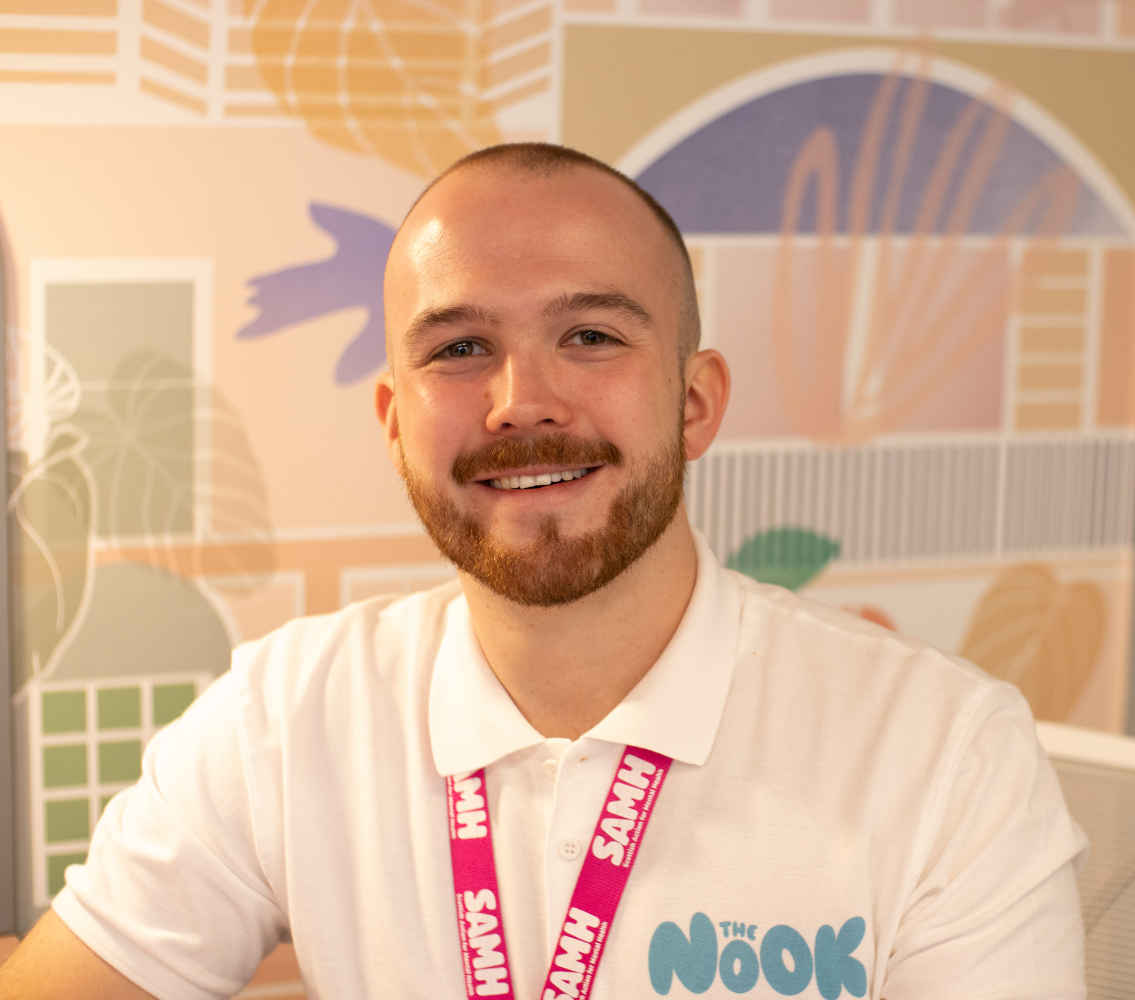
The Nook is the most ambitious project in SAMH’s 102-year history. Beyond that, it is the largest mental health charity initiative in Scottish history. It’s a groundbreaking £10 million plan that aims to revolutionise access to support for tens of thousands of people.
The Nook in Glasgow, where I am manager, is the first in a national network of walk-in mental health support hubs, enabling anyone in Scotland to ask once and get help fast.
We know that Scotland is in a mental health crisis, with demand increasing, waitlists growing and services stretched to breaking point. The Nook is our response. It provides barrier-free access to mental health support, with no need to book an appointment or get a referral, in a safe, welcoming, stigma-free space.
It will also help to relieve pressure on the NHS by supporting people that may be on a long waitlist, delivering preventative care and early interventions. Before this role, I worked as a paramedic and project coordinator. I saw firsthand how delays and long waitlists for mental health support can have a significant impact on people’s wellbeing. When I heard about The Nook and SAMH’s commitment to offering support with no need for a referral or waitlist, I knew it was something I wanted to be part of.
What makes this role unique for me is the combination of professional and personal purpose. As a paramedic, I was often the first person to meet someone in crisis, but I rarely got to see what happened after that first call. Here, I get to be part of the ongoing support, seeing people move from that first ask for help to recovery, sometimes just through a single meaningful conversation.
Help at The Nook ranges from one-to-one support and group sessions to talking therapies. We will also roll out an extensive outreach programme, helping many thousands more based in surrounding areas.
But the real innovation isn’t just in what we offer, it’s how we offer it. The Nook is about human connection first and foremost. We meet people as they are, not as a referral or diagnosis. I believe that’s crucial: when you remove barriers, when you make it easy to ask for help, people actually do. That’s where real prevention begins.
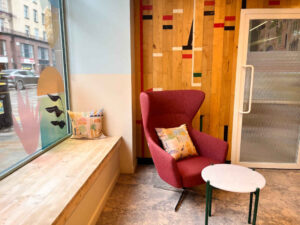 Our expertise is non-clinical mental health support, so the space has been deliberately designed to be welcoming, accessible and inviting. I’m fortunate that in addition to my team of practitioners, I also have the support of trained volunteers to welcome anyone who walks through our doors.
As a team, we’ve spent a lot of time thinking about how to make The Nook feel different, less like a service, and more like a community. Everyone who comes through the door is treated as an equal. There’s no stigma, no judgement, and no time limits on being heard. My hope is that this approach helps people reconnect with the idea that support can be simple, human and immediate.
The Nook in Glasgow opened its doors this month, with Aberdeen to follow next year and plans for Edinburgh, Inverclyde and Lanarkshire already in the works.
For me, this is more than just the start of a project, it’s the start of a culture shift in how Scotland supports mental health. If The Nook proves anything, I hope it’s that we can build systems that put compassion and accessibility at the heart of everything.
