Results for People – Reflections on delivering The Promise

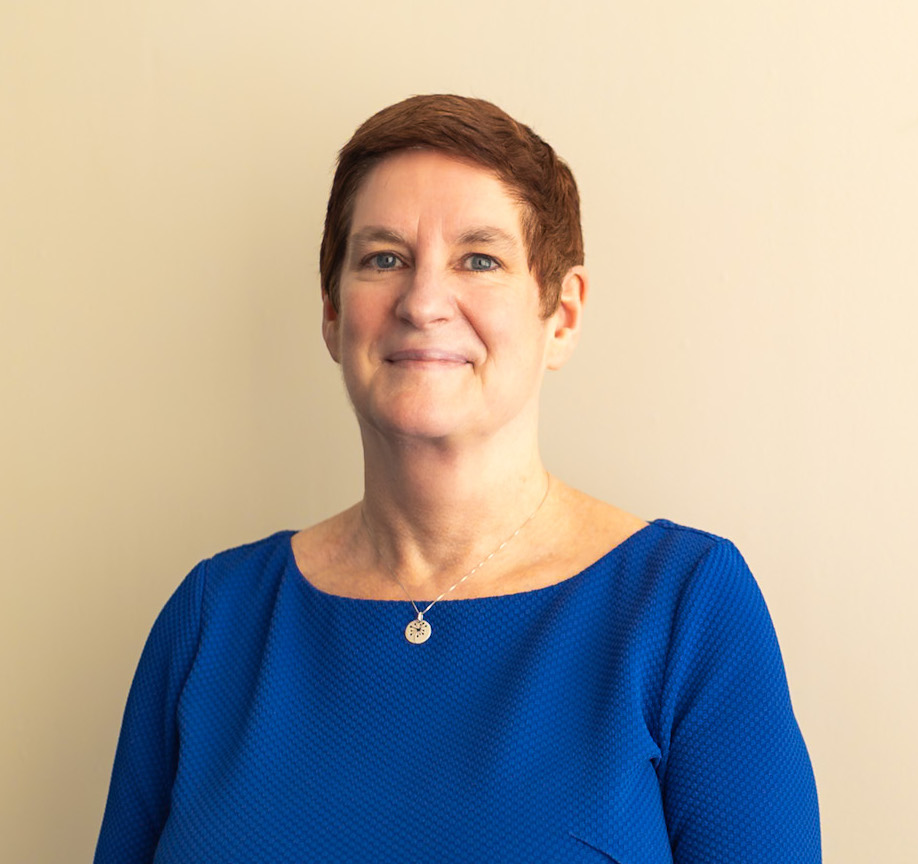
Justina Murray, Chief Executive of Aberlour Children’s Charity and CCPS Board Member, responds to last week’s report from The Promise’s Oversight Board
“A house is not a home because the plans exist – it becomes one when there is food in the cupboards, heat in the radiators and people who know they are safe, loved and belong. That is what delivery looks like in real life, and it is what Scotland now must make happen.”

(Oversight Board to The Promise, Report Four, 29 September 2026, p. 7)


There’s a lot been said and written about The Promise in the past week, following a pretty ferocious but welcome report published by its Oversight Board last Tuesday (29 Sept). If you are short of time there is a great summary here, or even better have a wee listen to this excellent Scotcast episode with David Anderson, Chair of the Oversight Board. You can hear his frustration and exasperation in every sentence, but also his resolve (‘The Promise: government hamstrung by bureaucracy?’, BBC Scotland).

I read this report, and listened to the podcast, with that feeling that the Oversight Board and its Chair must surely be inside my head. (And that is never a very relaxing place to be.) So many words and phrases had me shouting, “Yes, Yes, Yes!”, “Absolutely – that!”, and “What he said!”

Their report made so many on-the-money points, with my top picks including “Activity is not the same as action”; “Too much … remains on paper, not in practice”; and “A right that Parliament creates must become a right people can use.” It also leaned into one of my top rants, that providing more platforms for the voice of lived experience has provided little evidence of change as a result. Or in their words “… being asked for a view is not the same as having influence. People should be able to see what changed because they spoke.”

Yes, I can hear you yelling now too.

Crucially, the Oversight Board reminds us that the intent of The Promise was not “so the country could become better at describing failure” (for that has become a national pastime, right enough), but the aim was of course to create better lives now, and in the future, for care experienced people. That laser focus on outcomes (or ‘results for people’ as the late, great Colin Mair helpfully defined them back in my community planning days) is so often lost in translation, as we move from planning into implementation.

The report reminds us right at the start that “Care experienced people told Scotland the truth”. Yes, they did. And Scotland listened, and Scotland heard. The Promise was published in 2020 saying all the right things, a beautifully crafted narrative with the confident language of love/loved/loving flowing through its pages. As my colleagues know, I have a very unscientific, low-brow way of analysing and assessing documents through the simple power of the word count. There are 104 mentions of these three words in the 124-page Promise document (I mean that is nearly one on every page!). So unusual in any ‘official’ document. It looked different, felt different and sounded different.

The Independent Care Review wore its heart boldly on its sleeve (also threading this through its graphics), and we felt that surely this time change must now happen. Over 5,500 people had shared their views and experiences, over half of whom had direct experience of the care system as children, young people, adults and families. The Promise really did have voice at the centre of everything, not just its logo. And unlike many a national plan which lacks time and money, The Promise came with a ten-year timescale, and then a £500 million financial commitment for the Whole Family Wellbeing Fund alone. Not too shabby, as they say.

So how have we come to this point, with only a few years left until its original deadline of 2030? (Although more than once in the past week, I have heard “Oh it’s the end of 2030”, thereby adding what feels like a cheeky, but maybe essential, extra year to the original timescale.) It is painful to accept that Scotland’s ambition to #KeepThePromise has moved at a glacial pace, and we are running out of time.

Nowadays we endure endless chatter, to the point of obsession, about ‘whole family support’, which everyone suddenly seems to be providing, even if they are not, and don’t even get me started on the people who think it’s just been invented. If I had a pound for every time I heard the phrase ‘the right support at the right time’, I’d already be a millionaire, yet the more it is said, the less it seems to be evident.

Families need everything, from walk-in, reach-in early help with whatever really matters to them, through every form of support up to and including the most intensive community-based and residential options. This is what keeps families together safely and helps them to thrive. Yet in reality very few areas in Scotland have all of this on offer.

Meaningful, community-based early help remains thin on the ground. At the other extreme, the criteria for referral-based services is becoming tighter and tighter, bizarrely meaning families need to be on the cusp of breakdown, and their children on the edges of care, before the support they desperately need is offered. Public authorities are stressed about the ‘care crisis’, whilst spending £500m a year on fostering and residential placements for babies, children and young people – many of whom could have remained safely with their families with earlier, intensive, high quality (and let’s be honest substantially cheaper) support.

I definitely don’t remember this picture being recommended by the Christie Commission, and it is certainly not the vision of The Promise. Yet the babies, children, young people and families we support at Aberlour Children’s Charity are steeped in this reality every day.

I am famously obsessed with Scotland’s implementation gap between our progressive, well-informed, and widely supported plans, policies and strategies and what real life is like for real people. In the third sector, we may delight at our occasional seat at the table to help influence and shape the words, but (hang on a minute!) we don’t get the chance to influence where the money goes, or indeed how much money is in the pot in the first place. We are criticised if we call out the attitudes and cultures which thread through many so-called ‘helping services’, supposedly there to support children and families and uphold their rights, but too-often experienced by them as judging and diminishing.

As the Oversight Board has reflected, too often when we move into implementation we end up monitoring and reporting on busy-ness, not change for people. I’ve sat on oversight and scrutiny groups where I have felt nothing short of gaslit listening to reports of ‘progress’. I’ve read mounds of paperwork which would make your eyes bleed without actually saying very much. This includes some real classics where those doing the reporting have invented more shades of the rainbow on top of the traditional Red-Amber-Green (RAG) status than you would have thought humanly possible, just to give themselves a bit more wriggle room.

So where does this leave us as we approach the home straight for The Promise? The Oversight Board is clear that it is time to focus on delivery over all else. There are clearly articulated calls to action. But this is where accountability for delivery feels a wee bit more fuzzy. If “The Scottish Government and local authorities must …” or “The Scottish Government and those responsible for national delivery must …” or “The Scottish Parliament, Scottish Government and local authorities must…” who exactly is doing what by when? Who should we check, chase and cajole to get things done? Who do we pick up the phone to, to see how it’s all going? This is not so clear.

And of course all of these expectations are being directed at a public sector which (if the Scottish Government’s plans come to pass) is now facing the biggest structural shake-up for decades. From past experience, this is about as big a distraction, resource drain, and brake on progress as you can imagine. There is of course no evidence that structural change improves results for people, but it is repeatedly treated as the go-to fix, when all seems broken.

I love the words and intent of The Promise as much now as I did when it was first published. Its Oversight Board have done Scotland’s babies, children, young people and families proud by continuing to shout loudly and clearly that the status quo is absolutely not OK.

For the rest of us, it’s time to ask, for every meeting, for every report, for every decision, for every action and for every investment – will this improve results for people? For we have no more time to waste.

A reflection on my time as CCPS Convener

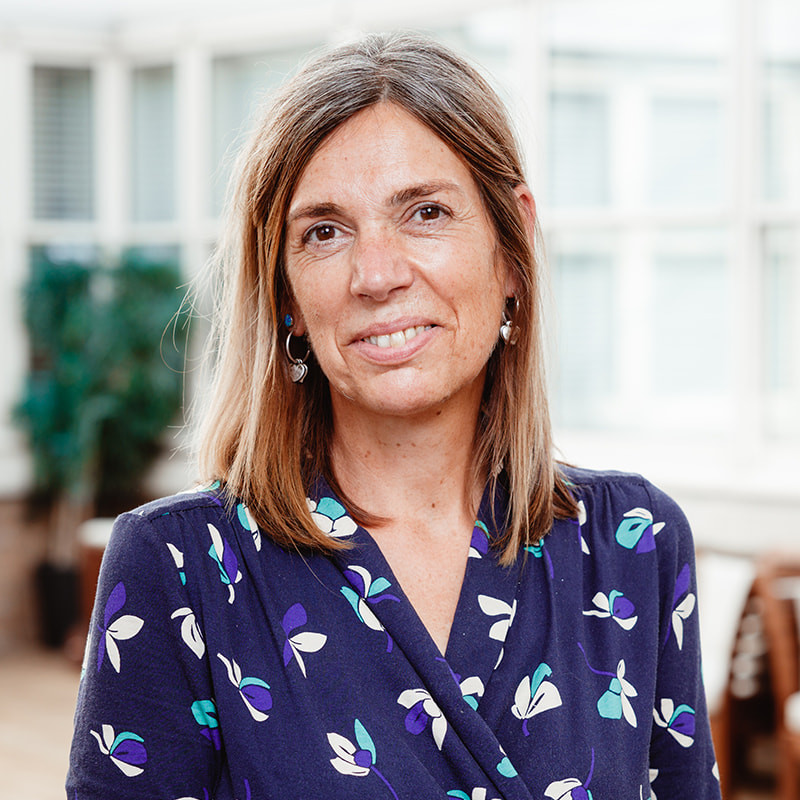
In this blog, Andrea Wood, CEO of Key, looks back on her time as Convener of CCPS, and ahead to why social care reform must have the people our members support at its heart

As my six years as Convener of the CCPS Board come to an end, I have been reflecting on what a privilege it has been to serve an organisation driven by strong values, committed people and an unwavering focus on improving lives across Scotland.

Looking back, what stands out most is the resilience and commitment of CCPS members. Over recent years, our sector has faced significant financial pressures, workforce challenges, policy uncertainty and growing demand. Yet throughout it all, voluntary sector providers have continued to deliver life-changing and life-enhancing support to people and communities across Scotland.

That commitment sits at the heart of everything CCPS exists to represent.

I want to take this opportunity to recognise the tremendous contribution our members make. Their willingness to engage, share expertise and work collectively has strengthened the voice of the entire sector. One of the highlights of my time as Convener has been seeing that participation and collaboration continue to grow.

Whether challenging funding decisions, responding to social care reform, promoting fair work, highlighting the impact of immigration policy or making the case for sustainable investment, the strength of CCPS has always come from the knowledge and experience of our membership.

That is important because the influence CCPS achieves is not something done for members, but something done with them.

So, as I prepare to step down as Convener, I do so with confidence in the future of CCPS and the part we can play in the current discussions about social care reform.

At the heart of this debate must be the rights, dignity and choice of people who draw on social care support. While resources remain under pressure, reform cannot be viewed solely through the lens of structures, systems or costs. Because the real test of any reform is not how tidy the system looks, but whether people feel in control of their lives, able to choose who supports them, and confident that services reflect their needs and values.

In the Programme for Government, the First Minister set out an ambition to simplify Scotland’s public sector landscape, speaking about the need to reduce duplication, clarify accountability and ensure more resources reach frontline services. He also announced a period of engagement on the future of social care.

These are important objectives, and it is entirely right that we examine whether our public services are organised in the best way to support people and communities. But we should avoid the temptation to focus on what can easily be counted: the number of organisations, the layers of governance, or the structures we create. Because the things that matter most are often harder to measure. For me, the test of any system is not its shape, size or complexity but whether it is working in a way that enables people to live good lives, strengthens communities and delivers better outcomes for those it exists to serve.

CCPS members play a unique role that extends far beyond service delivery. We are rooted in communities, driven by purpose and able to be innovate, adapt and respond to people’s needs. Our strength lies in our diversity because people are not uniform. Their needs, cultures, identities and aspirations differ widely, and a diverse provider landscape is one of the ways we can best meet those different needs in practice.

It is also important to recognise that what some describe as duplication can equally be viewed as independence, accountability and innovation. Separate leadership, governance and advocacy functions enable organisations to challenge systems, represent particular communities and drive positive change.

If we consolidate too far, there is a risk that we lose important voices, specialist expertise and the ability to advocate effectively on behalf of the people and communities we support.

These reflections should not be interpreted as resistance to change. In fact, the opposite is true.

The case for simplifying parts of our public sector landscape is undeniable. Our members, and the people whose lives we touch, have long been calling for reform which reduces unnecessary complexity and ensures that decisions are made at the level where they can have the greatest impact. More needs to be done to streamline arrangements, strengthen accountability and ensure that the voices and experiences of people who draw on support are at the centre of decision making.

Our shared challenge is to create a system that is simpler, and more effective, without losing the diversity, innovation and community connection that have long been strengths of Scotland’s voluntary sector. Achieving that will require fair funding, investment in the workforce and a policy and regulatory environment that supports, rather than constrains, innovation.

CCPS has an important role to play in the conversations ahead. By bringing together providers, public sector partners and communities, we can help shape reforms that strengthen collaboration while preserving the independence and diversity that are so vital to delivering good outcomes.

Above all, we can ensure that reform is co-designed. People who draw on support, unpaid carers and local communities should be involved in shaping policy, commissioning and service delivery at every level. Our sector has significant expertise in creating opportunities for participation and amplifying voices that are too often excluded from decision making. That experience will be essential if reform is to remain grounded in people’s aspirations, rights and lived experience.

As I conclude my time as Convener, I want to pay tribute to the people who have made that work possible.

My first thanks go to the CCPS staff team, led by our CEO, Rachel. Behind everything CCPS achieves is a dedicated group of people who care deeply about the future of social care and support. Their professionalism, expertise and commitment to our values have been exceptional.

Under Rachel’s leadership, CCPS has successfully navigated a challenging period for the sector while strengthening its foundations and setting a clear direction for the future through the development of our new 2026-29 strategy.

I also want to thank my fellow Board Directors. Effective governance is often undertaken quietly and without recognition, but strong stewardship, support and challenge are essential to any successful organisation. It has been a privilege to work alongside such dedicated colleagues, and I look forward to continuing that work over the coming year.

Finally, I want to thank CCPS members for the trust you have placed in me during my time as Convener. It has been an immense privilege to serve this organisation and to work alongside people who are passionate about improving lives and strengthening communities.

Whatever challenges lie ahead, I remain confident that the values, expertise and commitment that define our sector will continue to be a powerful force for positive change across Scotland.

Three new appointments made to CCPS’s Board of Directors  

Range of knowledge, experience and expertise from across third sector social care provision brought to governance roles

Following their election at our recent AGM, three new members have joined CCPS’s Board of Directors.   
 
Sean Donachie, Deputy Director of Services at Capability Scotland; Gary Meek, CEO of Blue Triangle; and Sara Murphy, Managing Director of Community Integrated Care, were appointed as Directors at the event on 22 September. 
 
Hazel Brown, CEO of Cornerstone; Lorraine McGrath, CEO of Simon Community Scotland; and Neil Richardson, Chief Executive, of Turning Point Scotland, stood for re-election and were re-appointed to the Board.  
 
Welcoming the news, CCPS’s Board Convener and CEO of Key Andrea Wood said:

“We’re delighted that Sean, Gary and Sara will be bringing their expertise, knowledge and experience to CCPS’s Board – and equally pleased that Hazel, Lorraine and Neil will be continuing with us as Directors.”
 
“Alongside our 10 other Directors, this is a Board of senior leaders from the social care and support sector able to draw on a uniquely valuable set of perspectives and experience in their governance roles.”

Having been a Director for 11 years, SallyAnn Kelly, CEO of Aberlour, stood down from the Board last month, as did Karen Sheridan, Community Integrated Care’s Chief Operating Officer, who has served since 2022. 
 
Andrea thanked SallyAnn for being “a tremendous asset to CCPS”, describing her as “always principled, and always focused on what’s best for the organisation and the sector”. Andrea also thanked Karen, acknowledging her “thoughtful and wise” contributions to the Board over the past three years. 
 
CCPS’s Board brings together a diversity of experience and knowledge across social care provision, spanning areas including children’s services, criminal justice, learning disabilities, housing, homelessness, mental health and poverty. 
 
The other members of CCPS’s Board are:

  • Angela Bonomy, CEO, Sense Scotland  
  • John Booth, Managing Director, Hillcrest Futures  
  • Dr Ron Culley, CEO, Quarriers  
  • Viv Dickenson, CEO, CrossReach  
  • Sue Freeth, CEO, Voluntary Service Aberdeen (VSA)  
  • Janet Haugh, Chief Executive, Right There  
  • Annie Mauger-Thomson, CEO  
  • Amanda Miller, Director of Community Services, Eildon Housing Association  
  • Dr Sam Smith, CEO, C-Change Scotland  
  • Fiona Steel, National Director for Scotland, Action for Children.

Click here to read more about CCPS’s Board 
 

Community of support and advocate for change: celebrating CCPS on its anniversary

What’s been the organisation’s contribution since 1999? Marking our quarter century, five Board members give their views

This year CCPS celebrates its 25th anniversary as a registered charity. To mark the milestone, members of our Board have given us their perspectives on our contribution since 1999 – and why the organisation matters.

C-Change CEO Sam Smith reflected on our unique role and what she’s gained from being a Board member, commenting:

“CCPS is a membership organisation that helps not for profit social care providers do their best to support our citizens and communities to thrive. It provides a community of support and learning that ensures civil society organisations can evolve and develop to meet the changing needs of Scotland’s population.

“Through CCPS my colleagues have a network of similarly committed professionals to learn and grow with. And for me as a leader, it is a place where I am supported and challenged to do and be better.”

Richmond Fellowship Scotland Chief Executive Austen Smyth, the longest serving member of our Board, said:

“I have been an active CCPS board member for over 18 years. During that time I’ve seen CCPS grow, develop and extend its reach and influence.

“The organisation plays a pivotal role in amplifying the issues and voices of the third sector social care and support sector. It advocates for providers as an important agent for change.”

Viv Dickenson, CEO of CrossReach, told us about the value of CCPS as a collective voice:

“The voluntary sector plays a critical role in delivering social care to thousands of people across Scotland. Providers can see ways to improve the system we operate within, both for supported people and for the workforce, but individually our voices are often not heard.

“Being a CCPS member gives us the opportunity to get together, explore the big issues in social care, and collectively advocate for positive change. It has been a force for good for 25 years, and Scotland would be the poorer without it.”

VSA’s Chief Executive Sue Freeth highlighted our role in influencing and collaborating with government, stating:

“VSA is proud to be a member of CCPS. Scotland’s third sector needs a strong voice to improve the lives of people VSA and other members exist to support.

“CCPS enables us to escalate concerns, become a better networked sector, to share new approaches and provides the platform to collaborate with government on practice based policy.

Finally, Doug Moyes, Director of Customer Service at Blackwood, highlighted CCPS’s pivotal role during the pandemic:

“CCPS has been a consistent voice and support for Scotland’s care sector over the last 25 years. While care providers face incredible challenges year on year there has never been such a significant contribution than CCPS support and guidance during the Covid pandemic.

“CCPS united providers across the country, supporting us to navigate new legislation and infection control measures and raised our collective issues and concerns on behalf of our customers and staff with government.”

Thanks to all Board members who contributed their views.