“We need all elected politicians to agree to stabilise our sector immediately”

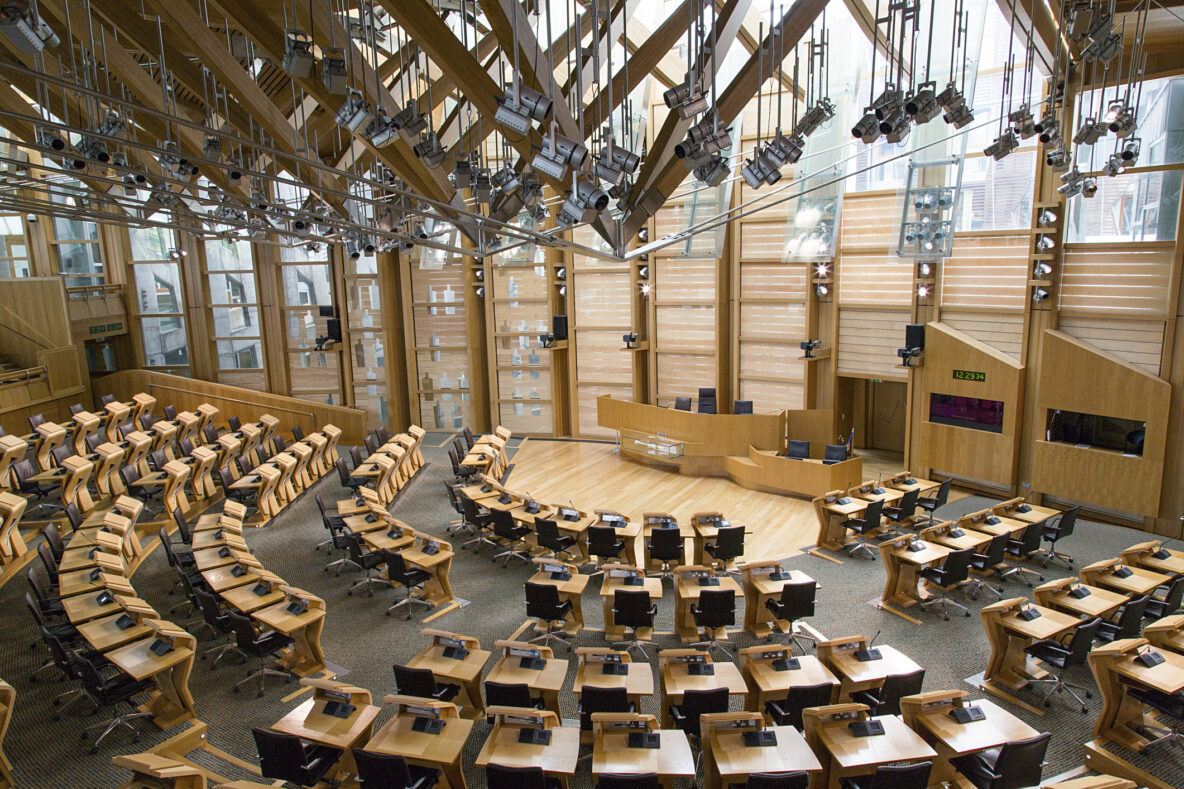
CCPS’s CEO Rachel Cackett responds to today’s debate at Holyrood on the crisis in social care

Responding to the debate in the Scottish Parliament earlier today on the crisis in social care, CCPS’s CEO Rachel Cackett said:

“Let’s start with the upside this afternoon: we’re glad that MSPs took the time to hold a 70-minute debate today on the perilous state of social care.

“And there was agreement on some fundamentals: services for vulnerable people require urgent investment; social care staff should be valued and paid properly as the professionals they are; overseas workers are a vital part of our workforce; and social care and support is an absolutely vital part of Scotland’s economy.

“But people across Scotland are missing out on support and basic rights today – and staff are under serious pressure. They require light not heat, concerted action not rehearsed argument.

“We know there is an election coming up, but we need all elected politicians to agree to stabilise our sector immediately and help us deliver a tangible, funded plan for people in need.

“Overall, today felt like a missed opportunity in the Chamber. We cannot afford more. With the Scottish budget coming before parliament soon there is another opportunity for parties to collectively drive change for all constituents.

“At CCPS we want to play our part – bringing the voice of vital not-for-profit providers to the table – but time is short. We hope for shared resolve – and we hope that isn’t misplaced.”

Better Futures Transitions from CCPS to CDPSoft for Next Phase of Growth

Scotland’s outcome-focused support tool moves forward with longstanding technology partner

The Better Futures logo: an orange and yellow sun sits behind a post with signs pointing in different directions. Below this, purple text reads 'better futures'.

Since its creation in 2011 as an outcomes-monitoring tool for housing support providers, the Better Futures programme has been delivered by the Housing Support Enabling Unit, hosted by the Coalition of Care and Support Providers in Scotland (CCPS), with backing from the Scottish Government. 

Through HSEU’s leadership and collaboration with service providers, Better Futures has become established as a nationally recognised system for outcome-focused support planning and case management. It is widely used across Scotland to support individuals, track progress, and evidence impact.

The delivery of Better Futures is now transitioning to CDPSoft, the long-standing technology partner behind the platform. The change has been planned for and builds on the strong foundations laid by HSEU and CCPS, ensuring continuity for current users while opening the door to continued development, support, and growth.

There will be no disruption to the Better Futures service. Current users can continue to access Better Futures without any change to the system’s functionality or data management. CDPSoft will manage all future contracts, system enhancements, and customer support, with a full transfer of Better Futures to CDPSoft, scheduled to be completed by the end of March 2026

CDPSoft will also introduce wider functionality, allowing organisations to do more than ever before, such as enhanced case management, risk management and safeguarding, client support, multi-agency collaboration, homelessness prevention and relief, and local authority commissioning.

The Scottish Government remains supportive of the programme, and CDPSoft is committed to working with it, existing Better Futures users, local authorities, and third-sector providers to ensure the system evolves in line with national and local priorities.

Rachel Cackett, Chief Executive Officer of CCPS, said:

“We’re proud of our record over the past 14 years developing and delivering Better Futures through the CCPS-hosted Housing Support Enabling Unit. Better Futures makes a vital contribution as a measuring tool for housing support providers throughout Scotland. However, it’s now time for a new beginning, and after a long period of positive collaboration with CDPSoft, we’re very pleased that Better Futures will transfer to them and that they are keen to take an enhanced role in delivering for customers.” 

Keirron Goffe, Senior Manager, Customer Development at CDPSoft, said:

“Better Futures has become an essential tool for outcome-focused support, and we’re honoured to take on its continued delivery. We look forward to working closely with existing partners to sustain what’s working well, while exploring new ways the platform can evolve to meet changing needs across the sector.”

This transition marks the beginning of an exciting new chapter for Better Futures – building on its strong foundations in Scotland while drawing on CDPSoft’s experience supporting services across the entire UK to improve progress and enhance outcomes for individuals and communities.

Social care spending commitment in winter plan ‘important step in the right direction’

CCPS’s CEO Rachel Cackett responds to today’s announcement from the Scottish Government on Winter Preparedness and National Planning Priorities for Health and Social Care

Responding to today’s announcement from the Scottish Government on Winter Preparedness and National Planning Priorities for Health and Social Care, Rachel Cackett, CCPS’s CEO, said:

“We welcome the Cabinet Secretary’s statement today on Winter Preparedness and National Planning Priorities for Health and Social Care.

“In particular, we welcome the pledge of £20m additional social care investment routed through NHS Boards and directed at strengthening local capacity. Although – as Mr Gray acknowledged – this is still far short of what will be needed to stabilise the sector, this spending commitment represents a significant step in the right direction, particularly ahead of the government’s upcoming spending review. We are keen to now work with national and local partners to understand the detail of how this will be distributed.

“We are also very encouraged by the Cabinet Secretary’s recognition of historic underfunding of our sector, the impact of the hike in employers’ National Insurance contributions and changes to visa rules, the need for a prevention-first focus, the importance of staff wellbeing and the strongly rights-based articulation of winter surge planning.

“The announcement today makes clear that not-for-profit social care organisations are regarded by the Scottish Government as vital system partners – as they are and should be.

“It acknowledges all the work that CCPS has done, with its members, in drawing attention to the real jeopardy our sector currently faces, and the unacceptable level of risk being carried by people who receive care and support throughout Scotland.

“In that light, we continue to be ready to work with the Scottish Government, CoSLA and local partners to share insight and solutions so that these major challenges can be resolved, and that people who need support can enjoy independent and fulfilling lives.”

Three new appointments made to CCPS’s Board of Directors  

Range of knowledge, experience and expertise from across third sector social care provision brought to governance roles

Following their election at our recent AGM, three new members have joined CCPS’s Board of Directors.   

Sean Donachie, Deputy Director of Services at Capability Scotland; Gary Meek, CEO of Blue Triangle; and Sara Murphy, Managing Director of Community Integrated Care, were appointed as Directors at the event on 22 September. 

Hazel Brown, CEO of Cornerstone; Lorraine McGrath, CEO of Simon Community Scotland; and Neil Richardson, Chief Executive, of Turning Point Scotland, stood for re-election and were re-appointed to the Board.  

Welcoming the news, CCPS’s Board Convener and CEO of Key Andrea Wood said:

“We’re delighted that Sean, Gary and Sara will be bringing their expertise, knowledge and experience to CCPS’s Board – and equally pleased that Hazel, Lorraine and Neil will be continuing with us as Directors.”

“Alongside our 10 other Directors, this is a Board of senior leaders from the social care and support sector able to draw on a uniquely valuable set of perspectives and experience in their governance roles.”

Having been a Director for 11 years, SallyAnn Kelly, CEO of Aberlour, stood down from the Board last month, as did Karen Sheridan, Community Integrated Care’s Chief Operating Officer, who has served since 2022. 

Andrea thanked SallyAnn for being “a tremendous asset to CCPS”, describing her as “always principled, and always focused on what’s best for the organisation and the sector”. Andrea also thanked Karen, acknowledging her “thoughtful and wise” contributions to the Board over the past three years. 

CCPS’s Board brings together a diversity of experience and knowledge across social care provision, spanning areas including children’s services, criminal justice, learning disabilities, housing, homelessness, mental health and poverty. 

The other members of CCPS’s Board are:

  • Angela Bonomy, CEO, Sense Scotland  
  • John Booth, Managing Director, Hillcrest Futures  
  • Dr Ron Culley, CEO, Quarriers  
  • Viv Dickenson, CEO, CrossReach  
  • Sue Freeth, CEO, Voluntary Service Aberdeen (VSA)  
  • Janet Haugh, Chief Executive, Right There  
  • Annie Mauger-Thomson, CEO  
  • Amanda Miller, Director of Community Services, Eildon Housing Association  
  • Dr Sam Smith, CEO, C-Change Scotland  
  • Fiona Steel, National Director for Scotland, Action for Children.

Click here to read more about CCPS’s Board
 

“It is only by standing together that we can ensure our sector is heard:” CCPS members gather at 2025 AGM

This week our membership community came together to share their experiences from the past year, discuss priorities, and speak with Scotland’s new Minister for Social Care and Mental Wellbeing

On Monday, CCPS hosted its AGM and members’ meeting in Edinburgh, bringing together representatives from our member organisations to reflect on the previous year and feed into our vision and priorities moving forward. 

As our Board Convenor Andrea Wood noted on the day, CCPS’s role in establishing a collective voice of not-for-profit social care providers in Scotland “has never felt more vital”. At an extremely uncertain and challenging point for members, “it is only by standing together that we can ensure our sector is heard.”  

The AGM and members’ meeting presented an important opportunity for members to come together to share their concerns and learning from the past year, while also giving them a chance to speak directly with the new Minister for Social Care and Mental Wellbeing, Tom Arthur MSP. 

Andrea Wood opened the AGM by celebrating the resilience and strength of CCPS members during a challenging year for the sector, and reflecting on the busy year CCPS has experienced. 

Welcoming two new member organisations who have joined CCPS since our last AGM, she thanked members for their high levels of engagement throughout the year, which has enabled CCPS to speak with credibility and authority in our advocacy work.  

CCPS’s CEO Rachel Cackett echoed these remarks, celebrating the strength of our community, which has supported CCPS to engage in meaningful and impactful advocacy over the past year. 

Looking ahead to 2026 and beyond, she opened up a discussion on CCPS’s renewed vision and priorities. She emphasised that investment will be foundational to our vision of a thriving social care system in Scotland, as will ensuring CCPS and its members are seen as strategic partners by policymakers.  

Given the importance of this partnership between members and decision-makers, the new Minister for Social Care and Mental Wellbeing, Tom Arthur MSP, was invited to speak with members. 

The Minister emphasised his commitment to working closely with the sector as he embarks on his new role. He recognised that members are pushing both for increased investment in the sector as well as a seat at the table in decision-making, and said that he takes this very seriously. 

Members raised a number of significant points with the minister, including the need for policymakers to have a firm understanding of the benefits of not-for-profit social care, the importance of sector representatives having a seat at the table in decision-making, and providers being seen as key strategic partners by the government.  

The Minister said he recognised the vital work members are doing within a very challenging landscape, and that he is committed to keeping this dialogue open to ensure government and parliamentary priorities address the needs of the sector.  

‘Action needed now to avert health and social care crisis in Scotland’, sector leaders urge First Minister in open letter

More than 200 third sector health and social care leaders have signed an open letter to the First Minister calling for immediate steps to address the crisis threatening the sector

More than 200 third sector health and social care leaders have signed an open letter to the First Minister calling for immediate steps to address the current crisis threatening the sector.

Published today in the Herald on Sunday, the letter makes clear that without action now, the consequences of the crisis will be felt across society, from deepening inequalities to even greater pressure on the NHS and public services – with Scotland’s most vulnerable individuals and families paying the price.

Read the letter and calls in full here.

Led by the Health and Social Care Alliance Scotland (the ALLIANCE) and the Coalition of Care and Support Providers in Scotland (CCPS), and supported by hundreds of its members, the letter makes four key asks of the Scottish Government:

  •   An immediate, substantial cash injection in the upcoming Spending Review, including full cost recovery for employer National Insurance increases
  •   A medium-term fully-funded recovery plan for the sector, to address decades of underinvestment
  •   Multi-year funding agreements adjusted for inflation, to ensure stability for organisations
  •   A firm commitment to fully include the sector in planning and decision-making

The Scottish Government’s recent announcement on reform sets out a commitment to change in the health and social care sector based on the Christie principles, from the widely-supported 2011 Christie Review.

These principles of empowerment, integration, prevention and efficiency provide a blueprint for what public services should be for and how they should be structured.

While the third sector supports these commitments, the reality is that they cannot be delivered without urgent, targeted investment in the very organisations expected to implement the changes.

Evidence from the ALLIANCE and CCPS lays bare the severity of the pressure currently facing the sector, and why the Scottish Government’s ambitions cannot be achieved without investment and stability:

In a March 2024 survey by the ALLIANCE, nearly half (49%) of the member organisations that responded reported their financial position as “insecure”.

A February 2025 poll by CCPS found that 67% of not-for-profit providers are relying on financial reserves to stay afloat – and of these 91% say they will cease to be viable within four years if that trend continues.

Recent data from SCVO shows that 81% of voluntary organisations are facing financial pressures that threaten essential services – an increase of 10% from 2023.

The ALLIANCE and CCPS are committed to working with the Scottish Government to achieve the key asks outlined in the letter in support of your vision for public service reform.

Read the letter and calls in full here.

Read CCPS CEO Rachel Cackett’s blog about the letter and Herald coverage.

“If the First Minister is to implement his vision for prevention, we need emergency social care investment now to stem the loss of services”

John Swinney can take a first positive first step to achieving the transformative vision we all want, says CCPS’s CEO Rachel Cackett

A photograph of five people. From left to right: Sara Redmond (The Alliance), Nick Ward (Change Mental Health), Tejesh Mistry (Voluntary Health Scotland), Rachel Cackett (CCPS) and John Swinney (First Minister).


A photo of five people at an event. From left to right: Sara Redmond (The Alliance), Nick Ward (Change Mental Health), Tejesh Mistry (Voluntary Health Scotland), Rachel Cackett (CCPS) and John Swinney (First Minister)

From left to right: Sara Redmond (The Alliance), Nick Ward (Change Mental Health), Tejesh Mistry (Voluntary Health Scotland), Rachel Cackett (CCPS) and John Swinney (First Minister)

This morning I attended the First Minister’s event to launch his vision for the future of health and social care, which is rooted in the recommendations of the widely-supported 2011 Christie Review. This meant a re-commitment from Mr Swinney to the core principle of investment in prevention and early intervention as the basis of transformation. 

In April the Scottish Fiscal Commission’s sustainability report suggested that, in economic terms, this is the right approach to avoid spiralling health costs threatening to undermine the entire Scottish economy.

But the government faces more than the infamous Scottish policy implementation gap as it launches this vision. If it can’t root this announcement for the future in the reality of what people are experiencing now, it will face a serious expectations gap perilously close to the 2026 election.

Whilst I can wholly support the FM’s vision to re-invigorate Christie, the fact is that preventative supports are the very services being decimated locally as Integration Authorities look into a £500m funding gap and as support providers, like the not-for-profits CCPS represents, feel the effect of years of underinvestment and devastating national insurance bills imposed by the Chancellor last October.

As services are forced to shrink we are seeing long waits for care and support which is too often now only available when people reach crisis point. If you are trying to get help for a parent with dementia, your teenager struggling with their mental health, or your brother struggling with addictions and facing homelessness, you know this already. Prevention is a long way from reality.

CCPS, with partners across the sector, has shared the severe risks that Scottish and local governments are facing and the importance of an immediate injection of money into the system to avoid harms to people and families who need support to live – let alone to live a good, fulfilled and independent life.

So, if the FM wants to deliver this change for the Scottish people (as I absolutely know he does) he has to immediately stabilise a social care sector on its knees – to put out the fires so there is a sustainable platform for future change.

And he can. If he chooses.

Next week sees the publication of the Scottish Medium Term Financial Strategy. Last week the UK Government announced a year on year 3% increase in health spending in England in the Spending Review. In the past this government has committed the totality of such additional NHS England spend to health spending in Scotland. But our government has integrated the health and social care sector, and its funding.

So, this is our ask of the First Minister after his speech today: commit a majority of the additional funds arising from English health spending to the desperately underfunded social care and support services you need. Make it the first, visible step to the transformative vision you’ve outlined.

Stabilise us now to allow us to help you deliver this welcomed vision, which we want to do. You need us and so do the Scottish people. You know the risks of not doing this; the 1 in 25 Scots needing social care this year, and their families, live that risk every day.

For our sector, this is the hope the FM opened his speech saying was much needed in Scotland.

Social care reform bill’s conclusion “far from its original aspiration”

Ahead of today’s Stage 3 parliamentary debate on the Care Reform (Scotland) Bill, we’ve published a briefing outlining our views on final amendments to the legislation

Ahead of today’s Stage 3 debate in parliament on the Care Reform (Scotland) Bill, CCPS has published a briefing outlining its position on key, final amendments to the legislation.

Consideration of the legislation at this stage comes more than four years after publication of the Independent Review of Adult Social Care, led by Derek Feeley, which set out an ambitious vision for social care reform that had widespread support.

However, following the Scottish Government’s decision in January to scrap the original version of the legislation – after a controversial passage through parliament – the re-named Bill is no longer underpinned by most of Feeley’s recommendations, including formation of a National Care Service.

Our briefing focuses on the amendments introduced by MSPs related to commissioning and Fair Work, both of which remain essential to effecting improvement.

However, CCPS’s CEO Rachel Cackett said:

“As the briefing makes clear, we are immensely disappointed that what was described as the biggest public sector reform of a generation is now a much more limited Bill.  A small number of important Stage 3 amendments are attempting to address key elements of a National Care Service otherwise completely lost in the renamed Bill, but this legislation falls far short of the aspirations for much needed change we all signed up to in the Feeley review.

“As a member of the new NCS Interim Advisory Board I have to hope that, with our partners, we can drive the fundamental changes to social care needed now outside of a legislative process that has taken three years. Feeley’s recommendations remain central to CCPS priorities for what comes next, as I know it does for many of our partners.”

In April CCPS,  the Coalition of Carers, Glasgow Disability Alliance, the Health and Social Care Alliance, Inclusion Scotland and Scottish Care, jointly published The National Care Service – Where Now?, a new paper arguing for a return to focus on Feeley’s recommendations including increased investment and clarity of purpose.

Click here to read the briefing

Click here to read The NCS – Where Now?

Immigration announcement ‘shows profound disregard for social care’

CCPS’s CEO Rachel Cackett responds to the UK Government pledge to curb recruitment of care workers from overseas

Responding to today’s announcement from the UK Government on immigration, CCPS’s CEO Rachel Cackett said:

“Building on messaging shared with the media by the Home Secretary over the weekend, this morning the Prime Minister announced a new white paper aimed at cutting levels of immigration into the UK.

Proposals to include the scrapping of visas for new social care workers will inflict further damage on a sector already deeply weakened by decades of underinvestment and now contending with the impact of increased employers’ National Insurance contributions.

The 2023 Social Care Benchmarking in Scotland report found that frontline posts were extremely difficult to fill, with 95% of respondents experiencing difficulties in recruiting operations staff.

Blocking routes for skilled and committed workers from abroad to be employed in social care and support in the UK, when we know so many providers are struggling to recruit and retain staff, is a retrograde step.

We are also deeply concerned by the rhetoric underlying the announcement today. Implying that support staff are ‘lower skilled workers’ is misinformed, disparaging of UK workers and deeply damaging  to the government’s own policy intent.

Over many years CCPS’s members have tirelessly highlighted that social care staff are highly skilled and regulated practitioners required to hold professional qualifications.

In Scotland, the reality is that low pay in the sector is not down to employers but to rates of pay for social care staff set by government; rates that utterly fail to recognise the professionalism of support workers.

If governments in Westminster or Holyrood want to attract more UK citizens into care and support roles they need to convey the worth of these crucial staff by paying a salary commensurate with the skills and responsibilities of the profession.

They must also radically alter their language to demonstrate the respect rightfully due to essential key workers. And they must ensure that people who are vulnerable and need support can receive it, when it is needed, from skilled, regulated staff – including from overseas when the UK labour market simply cannot meet need.

Whatever the political calculation behind today’s UK announcement, it has demonstrated a profound disregard for the contribution of the social care workforce – and ultimately, a depressing devaluing of the people they support.”


Programme for Government 2025-26: CCPS response

Today’s announcement by the First Minister follows a pattern of disappointment, says CCPS’s CEO Rachel Cackett

Responding to the 2025-26 Programme for Government, which was announced in the Scottish Parliament today, CCPS’s CEO Rachel Cackett said:

“Today’s Programme for Government followed a pattern of disappointment for our members and the people they support. The words ‘social care’ were not even mentioned in the FM’s speech to parliament.

“Failing to announce any investment plan for the sector, even though we have been clear to government about the crisis we are in, means supported people, their loved ones and staff on the frontline face an utterly unacceptable level of risk.

“And while the First Minister’s pledge to eradicate child poverty is welcome and sincere, failing to increase the Scottish Child Payment is another missed opportunity.”